Embroidery vs Print: How to Choose a Logo Method for Caps
Short answer
- Flat embroidery is the default cap logo method: 4,000-9,000 stitches across a 6-9 cm front logo, up to 12 thread colors.
- Use 3D puff only on thick, simple shapes; thin lines and small text collapse under foam.
- Screen print is the cheapest per piece at volume but fills in fine detail and cracks on heavy prints.
- Sublimation covers a whole panel in full color but needs polyester-rich fabric.
- Patches cost the most per piece and add texture that thread alone cannot.
The method you choose sets the detail floor, the durability, and the price per piece before a single cap is sewn. On a cap the decoration area is small and curved, so every method has hard limits. This guide compares the main options and where each one belongs on a cap.
Which logo method should you choose for a cap?
Choose flat embroidery for most cap logos, 3D puff when the artwork is bold and simple, screen print when volume drives the price, sublimation when the design needs full-color coverage, and a patch when you want texture and a premium look. The decision is a trade between detail, durability, feel, and cost per piece.
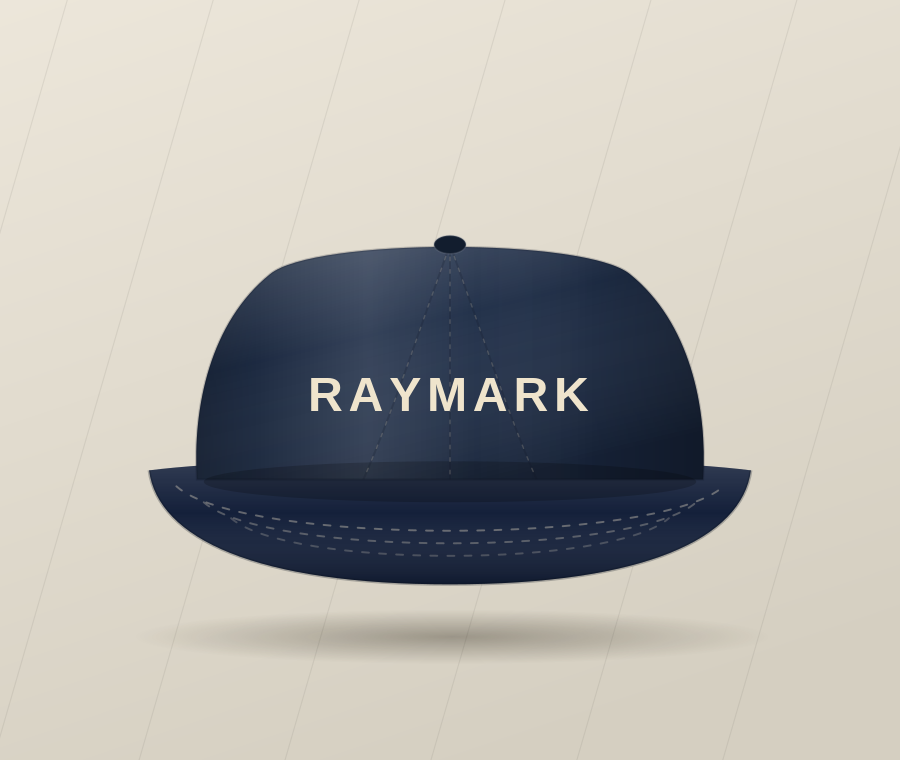
The front panel is small and curved, which limits every method. Raymark's typical front logo runs 6-9 cm wide at 4,000-9,000 stitches, and that scale is the practical envelope for most decoration choices.
Flat embroidery: why it is the default
Flat embroidery is the default because it holds detail, survives repeated washing, and reads as a real cap logo from a few feet away. It handles lines down to about 1 mm and text down to roughly 4-5 mm cap height, and it can carry up to 12 thread colors.
Cost scales with stitch count more than with color count. A common rule of thumb is $0.25-$0.50 per 1,000 stitches at 50-250 pcs, so a 4,000-stitch mark adds roughly $1-$2 per cap and a 9,000-stitch front adds $2.25-$4.50. Removing background fills and outlining large shapes instead of filling them is the fastest way to cut cost without changing the design.
When does 3D puff embroidery pay for itself?
3D puff adds a foam layer under the stitches so the logo stands up off the cap, and it pays off when the artwork has thick, simple shapes: block letters, a bold icon, a single word. The depth is the point, so the design has to be able to carry it.
It is a poor fit for fine detail. Thin lines, small text, and tight curves either bury the foam or get lost in it, and the edges need hand trimming. Expect a higher per-piece cost than flat embroidery because of the foam, the denser underlay, and that extra labor. Keep puff to one element and let the rest of the design run flat.
Screen print: lowest cost at volume, tightest limits
Screen print is the cheapest per piece once volume is high, because one screen setup prints many caps. On caps it is usually a one- or two-color hit on the front or side panel using plastisol or water-based ink.
The limits are real. Each color needs its own screen and setup charge, fine lines and small text fill in, and printing on a curved, seamed panel takes care. It suits bold one-color marks, event caps, and giveaways where unit price matters more than longevity. A heavy ink layer on fabric can crack over time.
Sublimation: full-color panels with no stitches
Sublimation dyes the design into a polyester panel, so it can print gradients, photos, and unlimited colors without a per-color charge. The catch is the fabric: it needs a high polyester content, which changes the hand and breathability compared with cotton twill.
That makes sublimation a fit for performance and fashion caps where the whole panel is the design, such as an all-over print or a gradient fade. For a small front mark, embroidery is cheaper, more durable, and more expected.
Patches: woven, chenille, and leather
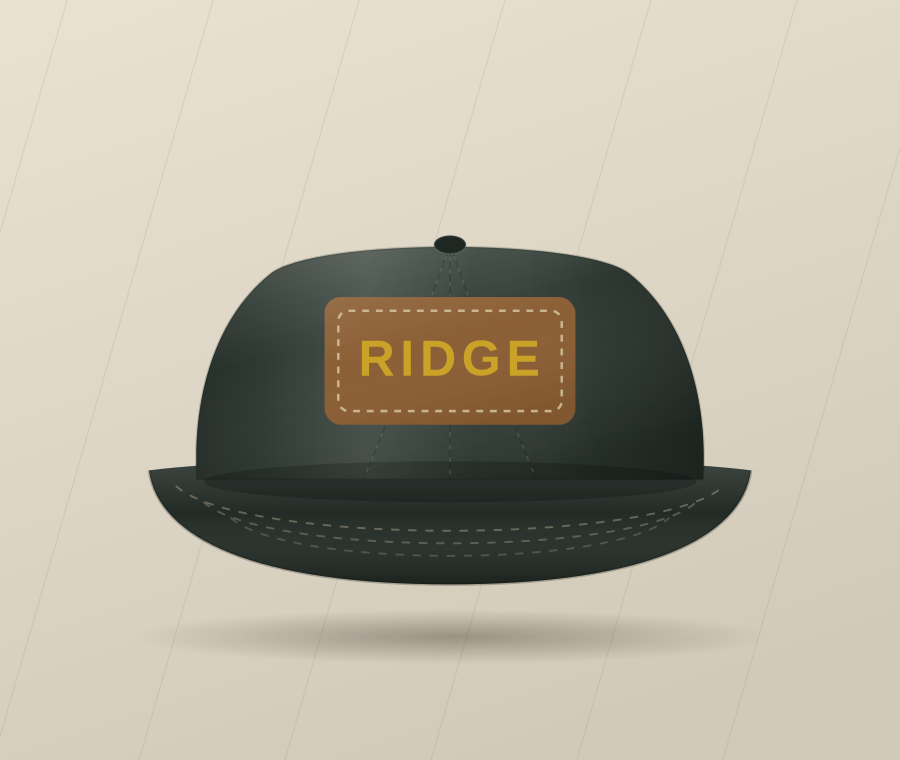
Patches give you texture that thread alone cannot: a woven patch holds fine detail and small text, chenille gives a raised, fuzzy, varsity look, and a leather patch adds a premium material cue. Each is sewn or heat-pressed onto the cap.
A patch sits on top of the front panel, so it adds thickness where the cap meets your forehead. It carries the highest per-piece cost of the common methods, but it lets a small brand look established. Leather patches can also be laser-engraved for a cleaner, more precise mark than stitching.
How do the methods compare side by side?
| Method | Best for | Cost impact | Limits |
|---|---|---|---|
| Flat embroidery | Most front logos, text, outlines | Moderate; rises with stitch count | Text below about 4-5 mm merges; dense fills cost more |
| 3D puff embroidery | Bold simple shapes, one-word logos | Higher than flat; foam and trimming add labor | Thin lines and small text collapse; simple art only |
| Screen print | High-volume one- or two-color marks | Lowest per piece at volume; setup per color | Fills in fine detail; can crack; curved panels |
| Sublimation | All-over prints, gradients, photos | Moderate to high; no per-color charge | Needs polyester-rich fabric; poor for crisp small text |
| Woven patch | Fine detail, small text, badges | High; patch plus application labor | Adds thickness; size limited by the panel |
| Chenille patch | Varsity looks, big raised letters | High; hand finishing | Bulky; not for fine detail |
| Leather patch | Premium brand marks, laser engraving | High; material and application | Heavier; engraving is normally one color |
How do you choose on a 50-piece order?
At 50 pieces, setup costs dominate. Screen print's per-color setup and patch tooling hurt far more than they would at 5,000 pieces, while embroidery carries almost no setup beyond digitizing the artwork once.
For a first run, flat embroidery on the front plus a woven interior label is usually the best balance of cost, durability, and perceived quality. Add puff or a patch only where the design genuinely needs the dimension, because both raise the per-piece price and narrow your artwork options.
Frequently asked
Is embroidery more durable than print on a cap?
Generally yes. Embroidery is thread stitched through the fabric, while print sits on the surface and can crack or fade with heavy wear and washing.
How many thread colors can a cap logo use?
Up to 12 at Raymark. More colors add thread changes and machine time, so a two- or three-color mark is usually the most cost-efficient.
Can a cap have both a patch and embroidery?
Yes. A common build is a woven or leather patch on the front with a small embroidered mark on the side or back, which spreads the decoration without crowding the front panel.
What is the smallest text embroidery can hold?
About 4-5 mm cap height is the practical floor; 6 mm or larger is safer for legibility. Bold sans-serif letters hold up better than thin serifs.